
Debt
Debt cancellation needs to go further – 100% should mean 100% for all governments and institutions, more poor countries should get debts cancelled, and debt relief should not be tied to economic conditions
Poor countries were offered loans by rich countries' banks and governments during the 1970s.
When interest rates soared in the 1980s, debts grew, and countries had to pay with money that should have been used for healthcare and education.
Lenders also attached damaging conditions to debt relief, such as forcing cuts in public spending and demanding that key services be privatised.
Financing debt relief
The Heavily Indebted Poor Countries initiative (HIPC) launched in 1996, and was expanded following the 1999 G8 Summit with pledges of $100 billion.
A further $50 billion was pledged at the Gleneagles G8 summit in 2005, and many creditors (including all G7 countries) agreed to cancel most debt owed by the HIPC countries, and other low-income countries as well.
G7 finance ministers have now agreed to the principle of total debt cancellation of multilateral debts - those owed to the World Bank, IMF and African Development Bank - by an initial set of poor countries, but not yet all.
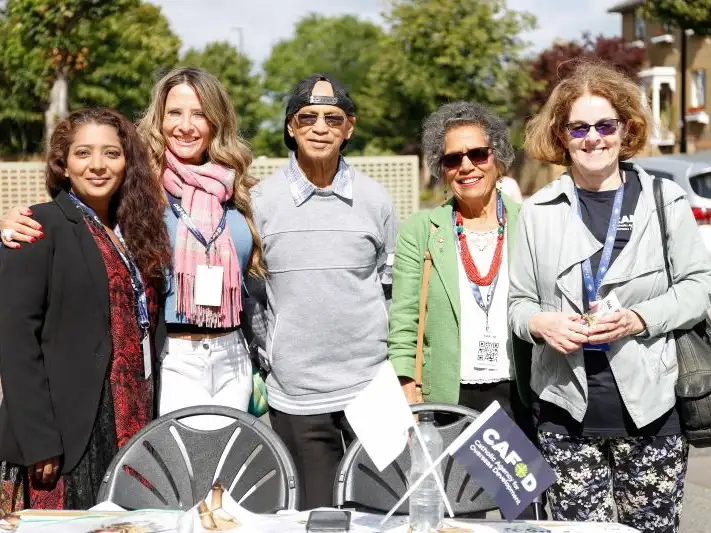
![]() Ten years on - debt campaigners return to Birmingham Campaigners from across the UK returned to Birmingham on 18 May to mark ten years since a ‘human chain’ of 70,000 people encircled the city calling for debt cancellation. What difference had that day made to them? |
![]() India: Better life three years on Before the tsunami, Chellema was living in a small house made of palm leaves that was frequently damaged by monsoons. Now she has moved into a larger brick house with her family |
![]() Support our partners in their struggle CAFOD has repeatedly asked the UK government to press the Colombian authorities to publicly defend human rights. Please support this call to action and the work of our partners in Colombia by emailing your MP now. YOU can make a difference |
![]() Shop for your Christmas cards and gifts Fairly-traded Christmas cards and gifts make wonderful presents for friends and family, while supporting our vital work at the same time |

![Nasreen in her vegetable garden, Pakistan. [Caritas]](/var/storage/images/about-cafod/where-we-work/pakistan/images/nasreen/908662-1-eng-GB/nasreen_0column50_04space_landscape.jpg)

![More than 700 campaigners rallied before delivering anti-poverty messages to every EU embassy in London [CAFOD]](/var/storage/images/media_folder/cafod/images/campaign_images/trade_justice_campaign_images/embassy_bus/199633-2-eng-GB/embassy_bus_0column50_04space_landscape.jpg)
![Fatna (right) brings home wood that she and some neighbours have harvested from outside the camp in Kubum, south Darfur [Paul Jeffery/ACT/Caritas]](/var/storage/images/about-cafod/where-we-work/sudan/images/fatna-right-brings-home-wood/247664-2-eng-GB/fatna-right-brings-home-wood_0column50_04space_landscape.jpg)
![Niccollette and Shrirvanie film the aftermath of the Guyanan floods, with support from CAFOD partner Guyana Human Rights Association [CAFOD]](/var/storage/images/about-cafod/what-we-do/communications/images/after-guyana-floods/679742-1-eng-GB/after-guyana-floods_0column50_04space_landscape.jpg)

![David Gwemani monitors the effects of IMF-designed Structural Adjustment Programmes in Zambia [Gideon Mendel]](/var/storage/images/media_folder/cafod/images/international_images/africa/zambia/david_gwemani/4810-2-eng-GB/david_gwemani_medium.jpg)


![Edmond Naim and his family recieved food and a hygiene kit from CAFOD's partner Caritas Lebanon. He has also recieved a loan to get his peach and apple farming business back up and running. [David Snyder]](/var/storage/images/media_folder/cafod/images/international_images/middle_east/lebanon/edmond_naim/235694-1-eng-GB/edmond_naim_0column75_06space_landscape.jpg)
![Chellema outside her thatched, palm-leaf house which was frequently damaged during the monsoon season, south east India, October 2006. [Noel Gavin]](/var/storage/images/media_folder/cafod/images/international_images/asia/india/chellema_outside_old_house/273767-2-eng-GB/chellema_outside_old_house_0column75_06space_landscape.jpg)
![More than three million people in Colombia have been forced to flee their homes during decades of fighting between guerrilla groups, paramilitaries and the army - the highest number of displaced people in the world after Sudan [CARITAS Colombia/CAFOD]](/var/storage/images/about-cafod/where-we-work/colombia/images/forced-to-flee-their-homes-/778622-1-eng-GB/forced-to-flee-their-homes-_1column00_08space_landscape.jpg)
![The CAFOD-funded National Federation of Fishworkers organises fishermen to defend their rights [Nithila Mariampillai/HUDEC]](/var/storage/images/media_folder/cafod/images/international_images/asia/sri_lanka/fisherman_throwing_net/2862-2-eng-GB/fisherman_throwing_net_1column00_08space_landscape.jpg)

![Moruk (far right) farms watermelons with his friends, after turning his back on a life dealing in black market goods [CAFOD]](/var/storage/images/about-cafod/where-we-work/east-timor/images/moruk-watermelon-farmer/910748-1-eng-GB/moruk-watermelon-farmer_0column75_06space_landscape.jpg)