Please note: CAFOD's programmes and projects in Mozambique closed in March 2026.
If you experience a problem donating via our website, please accept functional cookies in your browser or donate to us through JustGiving
Please note: CAFOD's programmes and projects in Mozambique closed in March 2026.

Mozambique, in south-eastern Africa, is a country rich in natural resources, arable land, abundant water sources, minerals and newly discovered natural gas deposits off its extensive coastline (which separates mainland Africa from the island of Madagascar).
However, a turbulent recent history has limited Mozambicans from developing a stable and diversified country. Mozambique is one of the poorest countries in Africa.
A former colony of Portugal, Mozambique gained independence in 1975 and is still suffering from the effects of a 16-year long civil war that ended in 1992. Tensions remain between the ruling Frelimo party, the former rebel movement, Renamo, and the most recent opposition parties led by opposition leader Venancio Mondlane.
The presidential election in October 2024 was marred by rigging and violence: 500 opposition supporters were killed, 600 injured and 5,000 jailed. Protests erupted across the country.
Additionally, since 2017, there has been a jihadist insurgency in Cabo Delgado province in the north of the country.
A better world needs all of us. That’s why CAFOD has worked in Mozambique since 1986, responding to emergencies and supporting farming families and young people, because every person deserves the opportunity to live with dignity and flourish.
In 2024 we reached around 1,700 people in Mozambique.
We worked with over 550 vulnerable young adults from the areas around the capital city of Maputo and the city of Beira, to learn technical skills that will help them get better jobs in the future.
We supported 11 young adults living with disabilities to shape their own future, learning skills that will help them find work in the future.
We helped 196 children living in resettlement camps with proper education, social care and food security.
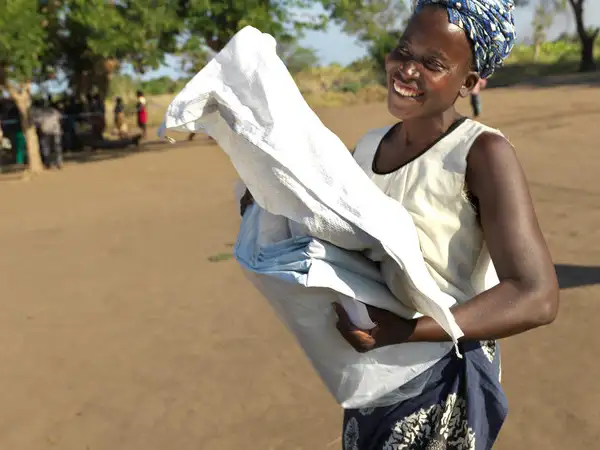
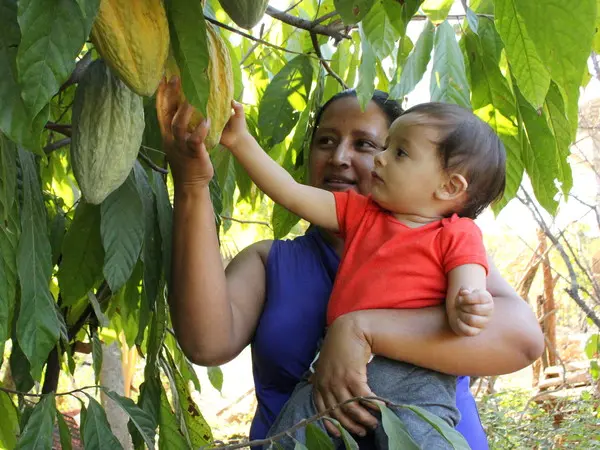
We worked with 948 vulnerable farmers to improve their production and access to local markets to sell their products, so they can support their families.
Mozambique is very dependent on foreign aid: two thirds of Mozambique’s population live below the poverty line. The most vulnerable people, including young people, women and rural communities (about two thirds of the country’s estimated 33 million people live and work in rural areas), feel the worst impacts of poverty.
Mozambique also has a very young population – 79 per cent of people are aged under 35 – but unemployment is leading to frustration among young people.
In recent years, an increasing number of young people have been moving to the main cities from the rural areas in order to find work. But many of them do not have the skills employers are looking for.
Lack of education is a chronic issue. Women and girls are especially vulnerable because they lack power in Mozambique’s patriarchal society. Only half as many girls (10 per cent) as boys (20 per cent) are educated to secondary school level. Teenage pregnancy rates are also very high.
The climate crisis is causing huge issues across the country. Natural disasters, like the recent Cyclone Idai, are impacting already limited farming and agriculture. Farming families must keep on farming to earn a living but frequent droughts, followed by floods, are devastating – especially for those with only a small amount of land for crops. On top of this, land grabs by large private companies are destroying the poorest rural communities.
We’ve helped small-scale farmers with seeds, tools and irrigation equipment, and offered practical training in agricultural techniques that mitigate the worst impacts of the climate crisis. All this has built on farmers’ traditional knowledge of their local ecosystems, while gradually introducing new techniques and practices, like agroforestry, polyculture, crop rotation and mulching. We have also supported local farmers to better access markets.
We have worked with local communities to promote values like human dignity, social justice and gender equity in everyday life. Together, we’ve developed personal skills such as self-confidence and self-esteem, while deepening everyone’s responsibility for the common good through concrete community services. We’ve worked to change attitudes and social norms that discriminate against women and girls.
We’ve worked with young people to improve their technical skills, so they can find work and build better futures for themselves. Our local partners have offered training in different technical areas and specific skills – training that doesn’t require any previous schooling – to vulnerable young people, including young women and internally displaced people, who have been forced out of formal education.
Together with young people and local experts, we have worked to strengthen the link between education and the job market by ensuring training meets the current and future professional needs in Mozambique.
CAFOD is the official aid agency for the Catholic Church in England and Wales.
With your help, we reach out to people living in hard-to-reach places, in war zones and those who are discriminated against.